

Latest News

Health and Mass Media Minister Dr. Nalinda Jayatissa pointed out that construction of a first-class post office building will be carried out in the Batticaloa district after 35 years.

In line with the Government’s policy statement, themed ‘A Rich Country, a Beautiful Life’ the Government has implemented a programme to develop the physical and human resources of the postal service operating in the country, which has a history of over 200 years, by innovating it.

Accordingly, the foundation stone for the construction of the new Kalawanchikudi Post Office building in the Batticaloa District of the Eastern Province at a cost of Rs. 29.5 million was laid with the presence of Health and Mass Media Minister on Thursday (18). The construction work is being carried out with the financial provisions from the Postal Department.

The Minister said that construction of a grade-one post office building will commence today in the Kalawanchikudi area of the Batticaloa district, after 35 years due to the failure of previous Governments to improve the postal service.

He said that construction of the buildings will begin from the moment the foundation stone is laid, and that the building will be opened to the public in December this year, providing services to over 9,000 people in this area.

The Minister emphasised that the Government will allocate funds for the modernisation of existing post offices and sub-post offices, and that a significant amount will be allocated for the development of the postal service in the upcoming budget.

Recalling that in the past, postal employees used their personal technical devices to maintain the service without allowing it to collapse due to insufficient physical resources required for the postal service, the Minister pointed out that Rs. 200 million has been allocated for the purchase of new lorries, cabs, as well as laptops and desktop computers, and that steps will be taken to recruit staff for various grades and promote staff grades.

He stated that there is no room for racism under the new Government, and that the people of Batticaloa, as well as the entire country, will live in harmony, enjoying democracy without racial discrimination, and that any attempt to incite racism and religious conflicts will not be tolerated and that the law will be enforced if there are people who engage in such activities.

The previous Governments had not taken steps to construct new post offices since 2016, and this is the fifth post office building for which the foundation stone was laid by the Government after coming to power. The Government has allocated Rs. 600 million for new construction in the Postal Department this year, and arrangements have been made to construct 20 post office buildings. The vision of the Sri Lanka Postal Department is to be the best relationship partner by providing modernised and multifaceted services.

EP Governor Professor Jayanthalal Ratnasekera, Batticaloa District Parliamentarian Kandasamy Prabhu, Kalawanchikudi Pradeshiya Sabha Chairman Megasundaram Vinoraj, Secretary U. Udayasreedhar, Deputy Postmaster (Development) Thusitha Hulangama, Deputy Postmaster (Eastern Province) S. Prakas, Batticaloa District Postal Superintendent S. Jagan, Kalawanchikudi Postmaster R.U.T. Romesh and staff were also present.

Health and Mass Media Minister Dr. Nalinda Jayatissa stated that the Government had to spend an extra Rs.30 billion (more than double the estimated cost) to complete 17 projects in the health sector that have been halted mid-way or delayed in the past.

The Minister said the Government currently has to bear a cost of Rs.59 billion for the 17 projects, and that if those projects had been completed within the stipulated time frame, those projects could have been made vested with the public for Rs. 29 billion.

The Minister was speaking at a ceremony to inaugurate infrastructure and physical development at the Ampara District Hospital recently. Accordingly, steps were taken to restart several development projects at the hospital that had been halted.

Accordingly, the construction work that commenced on the new Accident and Emergency Unit (A&E) at a financial cost of Rs.950 million and the Catheterisation Laboratory Unit Complex at a project cost of Rs. 354 million was inspected by the Health and Mass Media Minister.

These projects are scheduled to be completed in 2026. In addition, the project to improve the internal road system of the Ampara Hospital was also initiated, and the newly provided ambulance with modern facilities and the mobile laboratory vehicle were also donated to the hospital.

Addressing the ceremony held afterwards, Minister Jayatissa said that since the Ampara District Hospital provides healthcare services to around 800,000 people in the Ampara District and a large number of people in the surrounding areas, steps will be taken to upgrade the hospital to a higher level.

Accordingly, the Minister also pointed out that plans were made to resume the construction of the Emergency and Response Unit and the Catheterisation Laboratory Unit, which had been halted in the past, and to complete those projects within a stipulated time.

The Minister emphasised, if the construction of the Accident and Emergency Unit had been completed within the stipulated time, the Government would have had to spend Rs. 873 million, and to complete the re-started project, it would have to incur a cost of double that amount, Rs. 1589 million.

The Minister also said if the Catheterisation Laboratory Unit Complex project was completed within the stipulated time it would have cost only Rs.354 million, and now the Government will have to incur a cost of Rs. 720 million to restart work and complete the project.

The Health and Mass Media Ministry has announced that all individuals and institutions operating cable or satellite (DTH) television broadcasting stations without a valid licence will be given a grace period until November 30, 2025 to obtain proper authorisation.

According to Secretary to the Ministry of Health and Mass Media, Dr. Anil Jasinghe, it is mandatory for operators to possess a valid broadcasting license issued under their name by both the Health and Mass Media Ministry and the Telecommunications Regulatory Commission of Sri Lanka (TRCSL) to legally function as a cable or satellite TV operator, whether for personal or business purposes.

Dr. Jasinghe further emphasised that maintaining a television broadcasting station without such a licence is an offence under Section 28 of the Sri Lanka Rupavahini Corporation Act No. 6 of 1982.

He also noted that the import, production, sale, rental, renovation, or distribution of related broadcasting equipment without proper authorisation is strictly illegal under Sri Lankan law.

“The licence issued to an individual or organisation cannot be handed over or transferred to a third party,” Dr. Jasinghe added. “We also wish to remind the public that entering into agreements with illegal broadcasting operators will render such agreements null and void before the law.”

The Ministry warned that any satellite or cable-based broadcasting station operating without a valid licence after the deadline will face legal action. Application forms for licences are available at the Health and Mass Media Ministry or can be downloaded from the official website www.media.gov.lk.

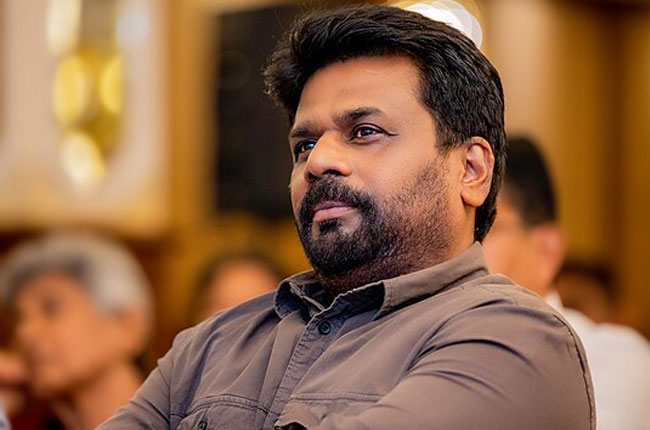
President Anura Kumara Dissanayake will leave for the United States of America tonight.

The President is expected to participate in the 80th Session of the United Nations General Assembly. He will address the General Assembly at 3.15 p.m. US time on Wednesday (24).

President Anura Kumara Dissanayake is also due to hold bilateral discussions with the United Nations Secretary-General and several world leaders.

The Ministry of Foreign Affairs, Foreign Employment and Tourism today (22) announced that President Anura Kumara Dissanayake will undertake an official visit to Japan from September 27 to 30, 2025, at the invitation of the Government of Japan.

During the visit, President Dissanayake will have an audience with His Majesty the Emperor of Japan and hold a summit meeting with the Japanese Prime Minister to discuss a wide range of issues of mutual interest.

As part of his official program, the President will address a Business Forum in Tokyo attended by leading Japanese businesses and investors, focusing on emerging economic opportunities in Sri Lanka. He will also participate in “EXPO 2025 Osaka” as a Guest of the Government of Japan on the occasion of Sri Lanka Day, an event that will showcase the country’s cultural heritage and economic potential to a global audience.

President Dissanayake is also scheduled to meet with members of the Sri Lankan expatriate community residing in Japan.

The President will be accompanied by the Minister of Foreign Affairs, Foreign Employment and Tourism Vijitha Herath, along with senior government officials.

The Ministry noted that this visit is expected to further consolidate and deepen the longstanding bonds of friendship and cooperation between Sri Lanka and Japan.

President Anura Kumara Dissanayake stated that in order to advance the country economically, it is essential to ensure efficiency and transparency across all sectors. He further noted that the current Government’s digitalisation programme is designed to elevate Sri Lanka not only economically but also socially.

The President made these remarks while participating in the ceremony held at the Bandaranaike Memorial International Conference Hall (BMICH), Colombo, to launch the National Cyber Protection Strategy (2025–2029) and to open the National Cyber Security Operations Centre (NCSOC) yesterday (19).

The Sri Lanka Computer Emergency Readiness Team (Sri Lanka CERT), in collaboration with the Digital Economy Ministry and with the technical support of the World Bank, has introduced the National Cyber Protection Strategy 2025–2029. This initiative aims to establish a secure, reliable and inclusive digital ecosystem as a significant step in the country’s digital economic transformation programme.

The strategy envisions the establishment of the necessary legal and administrative framework forcyber security, the creation of a skilled workforce equipped with knowledge and expertise in cyber security and the enhancement of public awareness, including among schoolchildren. It also seeks to improve the preparedness of state institutions, strengthen the capacity of Sri Lanka CERT, protect institutions that manage critical digital infrastructure and foster collaboration with multiple stakeholders to create a secure cyberspace.

The National Cyber Security Operations Centre, inaugurated today, will provide 24-hour monitoring of 37 institutions managing critical digital infrastructure, including the Department of Immigration and Emigration, the Department of Motor Traffic and the Department of Inland Revenue, in order to identify and respond to potential cyber-attacks. Its mandate includes the continuous monitoring of cyber threats, risks and attacks, issuing immediate alerts to relevant parties and protecting government systems and public digital services. The centre will also support both state institutions and the private sector to ensure safe digital operations by strengthening system resilience, providing early warnings, ensuring swift responses to threats and raising awareness. The benefits of the centre include continuity of operations, rapid response, cost-effectiveness, compliance and trust.

The National Cyber Protection Strategy (2025–2029) was formally presented to President Anura Kumara Dissanayake, who also serves as the Minister of Digital Economy, by the Deputy Minister of Digital Economy, Eranga Weeraratne.

Addressing the gathering, the President further observed that countries capable of swiftly harnessing advances in science and technology achieve rapid progress. He emphasised that the national cyber security framework will play a crucial role in safeguarding national security, strengthening the economy and protecting citizens’ way of life.

Commenting further, President Anura Kumara Dissanayake said that today marks the beginning of a significant undertaking. He noted that what has been opened is not merely a building or an office. If Sri Lanka is to pursue a strong path of digitalisation, he stressed, security, resilience and reliability are indispensable. The cyber security system inaugurated today is therefore a vital milestone in Sri Lanka’s digital economic journey.

Whether considering politics or the global economic trajectory, the key factor is that countries able to rapidly absorb technological and scientific advancements move swiftly toward the forefront of development. Conversely, states that fail to adopt these advances are increasingly left behind. This, I believe, is the core of the crisis currently facing Sri Lanka.

We all know that many ideas and concepts were generated in the 16th and 17th centuries, yet most of them only became a reality in the 20th century. Advances in health, the emergence of democratic elections allowing people to choose their leaders in a world once dominated by royal hierarchies and new forms of human interaction all came into practical existence during this period. Similarly, the digitalized world began to assume a major role from the late 20th century onward.

We are faced with two possible paths. The first is to rapidly embrace digitalization and transform it into a practical reality, enabling us to progress in step with advanced nations. The alternative

failing to adopt these technological advancements will only widen the gap between us and the rest of the world.

The knowledge, tools and systems enabled by modern technology must be swiftly integrated into our state. For this reason, digitalization has been recognized as a priority programme of the government, with scholars and professionals contributing their expertise and dedication to its advancement.

Transparency is equally crucial. Our state machinery currently faces a profound crisis in transparency, affecting areas such as procurement, grants, recruitment and policy decisions.

Digitalization, therefore, plays a vital role in establishing and ensuring this transparency.

Moreover,digitalization is essential not only for meeting human needs but also for creating new markets and economic opportunities. Through digitalization, businesses can access and capture emerging markets. Recent successes in both public and private institutions demonstrate that such innovations have led to the creation of new markets. Therefore, digitalization holds significant importance for the business sector as well.

For a country to progress economically, social life must be made efficient and this is achieved through the digital economy. Rather than living a constrained life, digitalization provides tools that allow daily needs to be met freely and conveniently. Therefore, whether in public service, the business sector or among ordinary citizens, digitalization should become the central strategy of our economy.

Some express concern that people might become like machines and lose their human emotions.This is not the case. Humans are naturally emotional and socially connected. The path forward lies in creating a robust network to prevent potential risks and this network can be built using technology itself. It must continue to be developed, as the knowledge gained today is generating new knowledge, driving rapid transformation. This is a dynamic process. In the past, threats could be countered by building walls, but cyber-security is not a static wall, it must continuously confront and mitigate threats. Therefore, the national cyber-security system is crucial for safeguarding national security, the economy and the daily lives of citizens. Appreciation is extended to all scholars and professionals who have contributed to this effort and congratulations are offered for advancing these initiatives with even greater strength.

In line with the government’s policy theme, “A Rich Country, a Beautiful Life”, an urgent program has been launched to modernize Sri Lanka’s postal service, which has a history spanning over 200 years, and to develop both its physical and human resources.

As part of this initiative, the foundation stone for a new Kaluwanchikudy Post Office in Batticaloa District, Eastern Province, was laid yesterday (18) at a cost of Rs. 29.5 million, under the patronage of Minister of Health and Mass Media, Dr. Nalinda Jayatissa. The construction will commence immediately, with the building expected to open to the public by December 2025, serving over 9,000 residents.

Minister Jayatissa emphasized that this marks the first post office construction in the Kaluwanchikudy area in 35 years, highlighting the current government’s commitment to postal modernization after past administrations failed to act. In addition, Rs. 200 million has been allocated for new vehicles, laptops, desktops, and recruitment to strengthen the workforce.

The Minister further stressed that the government upholds racial harmony and democracy, ensuring strict action against any attempts to incite racial or religious conflicts.

This project is part of a broader plan, with Rs. 600 million allocated this year to construct 20 new post office buildings nationwide, reinforcing the vision of the Sri Lanka Postal Department to become a leading service provider through innovative and multifaceted offerings.

Sri Lanka’s third nanosatellite, developed with the technical contribution of local engineers, is set to be launched into orbit tomorrow (19), according to the Arthur C. Clarke Institute in Moratuwa.

Named ‘Birds–X Dragonfly’, the satellite was transported to the International Space Station (ISS) on August 24 via NASA’s SPX-33 rocket mission. It is scheduled for deployment into orbit from the ISS at 2:15 p.m. tomorrow.

Sri Lanka entered the space era in 2019 with the launch of ‘Ravan-1’, followed by ‘Kitsune’ in 2022, developed under a multinational cooperation project. The Birds–X Dragonfly marks the latest milestone in Sri Lanka’s growing participation in space technology.

The government’s film sector, which has grown and evolved since 1949, deserves due recognition, said the Minister of Mass Media Dr Nalinda Jayathissa.

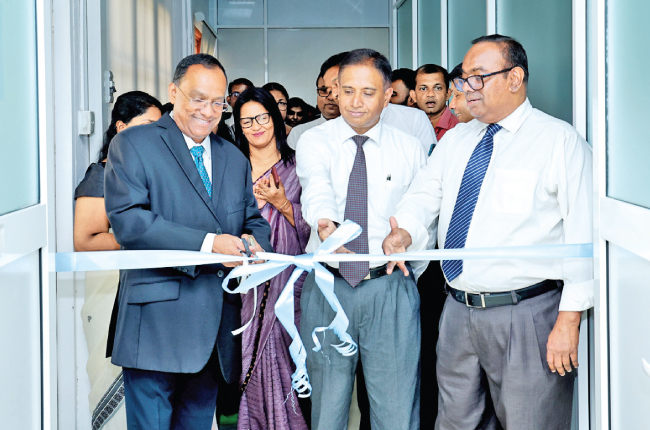
He expressed these views this afternoon (16) at the inauguration of the renovated Film and Digital Archive Unit of the Government Information Department.

The Minister further stressed that such facilities should be made available to school children and youth, enabling them to explore and appreciate the nation’s cinematic legacy.

Since its establishment on September 17, 1949, the government film sector has preserved a wealth of invaluable works produced through cinema, DVDs, and digital media, which are carefully safeguarded at the Archive Unit.

Commenting on the renovation, Minister Jayatissa noted that although the project was initially estimated at Rs. 19 million, the fully-equipped archive unit was successfully completed at a cost of only about Rs. 6 million and it's significant saving for the government.

Japanese Ambassador to Sri Lanka Akio Isomata visited the National Hospital of Sri Lanka on September 10. He was accompanied by Health and Mass Media Minister Dr. Nalinda Jayatissa. The purpose of this visit was to review the status of operation of the advanced medical equipment provided through Japan’s ODA project.

Ambassador Isomata toured the new Outpatient Department (OPD), which has MRI and CT scan machines donated by the Japanese government. These machines significantly enhance the quality of medical diagnostics in Sri Lanka. He also inspected critical care equipment which was donated by the Rotary Club of Hamamatsu South, Japan, at the Non-Trauma Emergency Treatment Unit (ETU). The equipment facilitates rapid diagnosis and treatment of non-traumatic emergency cases.

Additionally, Ambassador Isomata visited the Intensive Care Unit (ICU) of the Accident Ward, where he observed the bedside patient monitors and the central monitoring system installed, also provided by the Japanese government. These monitors and the system enable real-time monitoring of critical patients, allowing for swift medical responses.

In his remarks, Ambassador Isomata emphasised Japan’s long-standing support for Sri Lanka’s healthcare sector, starting with the construction assistance of the Sri Jayewardenepura General Hospital in the 1980s. He highlighted Japan’s recent contributions to hospitals nationwide and efforts to assist in the enhancement of medical services in the country, particularly in the Northern and Eastern Provinces. Minister Jayatissa expressed deep gratitude for Japan’s continuous support, acknowledging its significant impact on improving the quality of healthcare for the people of Sri Lanka. This visit not only showcased the tangible benefits of Japan’s support, but also reaffirmed the strong bilateral relationship between Japan and Sri Lanka. Both countries expressed their commitment to continue collaborating to promote the health and well-being of all Sri Lankan citizens. This visit reinforced the shared goal of deepening cooperation in the healthcare sector and pursuing the well-being of all citizens.

A special Japanese delegation, led by Ambassador H.E. Akio Isomata, together with Minister of Health and Mass Media Dr. Nalinda Jayatissa, inspected the Sri Lanka National Hospital yesterday (10). The visit focused on reviewing the advanced medical equipment recently donated by the Government and people of Japan.

The inspection aimed to assess the treatment services provided by the donated equipment and to explore further avenues of support for strengthening Sri Lanka’s healthcare system.

Japan’s donation, valued at 1,000 million yen, included an MRI machine, a CT scan machine, a Cathlab treatment unit, and a range of essential medical and surgical equipment. These contributions are expected to enhance diagnostic capacity and improve the quality of patient care at the country’s premier government hospital.

Minister Jayatissa expressed his gratitude to the Japanese government and Ambassador Isomata, noting that Japan’s assistance plays a crucial role in the continued development of Sri Lanka’s health sector. Ambassador Isomata reaffirmed Japan’s longstanding friendship with Sri Lanka and pledged continued support for future healthcare initiatives.


Page 7 of 121

Latest News

SL Post exceeds revenue target by earning Rs 13.1B

Jan 12, 2026
Sri Lanka Post has exceeded the revenue target set by the Treasury for 2025, earning Rs…

“Clean Sri Lanka – STEP UP” National Early Childhood Development Programme Launched

Jan 12, 2026
The “Safe Childhood- Creative Future” Clean Sri Lanka: STEP UP national early childhood…

A New Chapter in Sri Lanka’s Media Education Sector: MMC–ITN Campus Marks New Milestone with International Collaboration

Jan 08, 2026
Marking a significant milestone in the history of Sri Lanka’s media education sector, the…

First-ever food and beverages department for patients launched

Jan 07, 2026
The Apeksha Hospital in Maharagama will open a Food and Beverages Department tomorrow…

Gov’t to Grant Rs. 5 Million for New Houses Following Disaster Damage; Payments Start Next Week

Jan 07, 2026
The government will commence the disbursement of the Rs. 5 million (50 Lakhs) grant for…

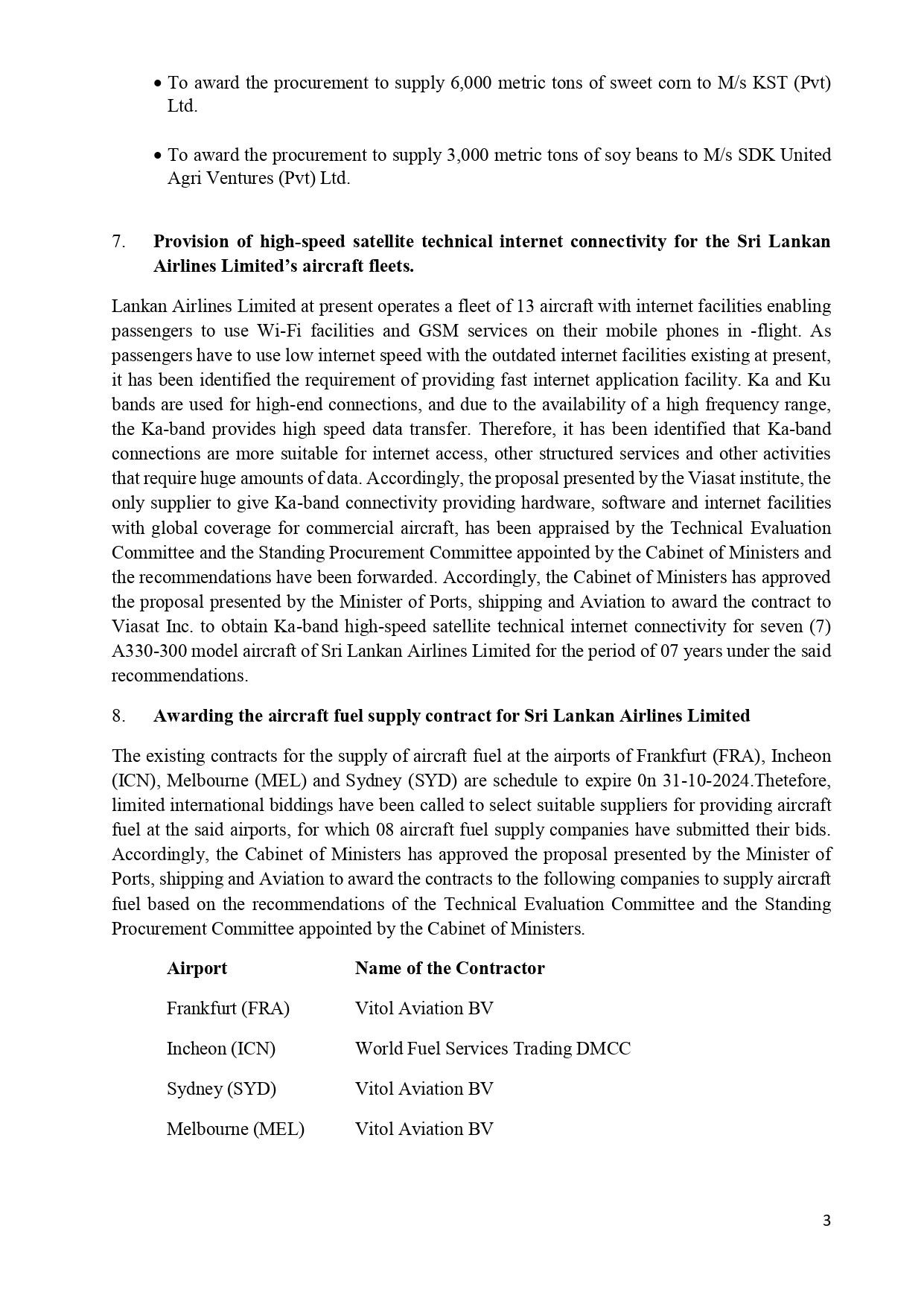
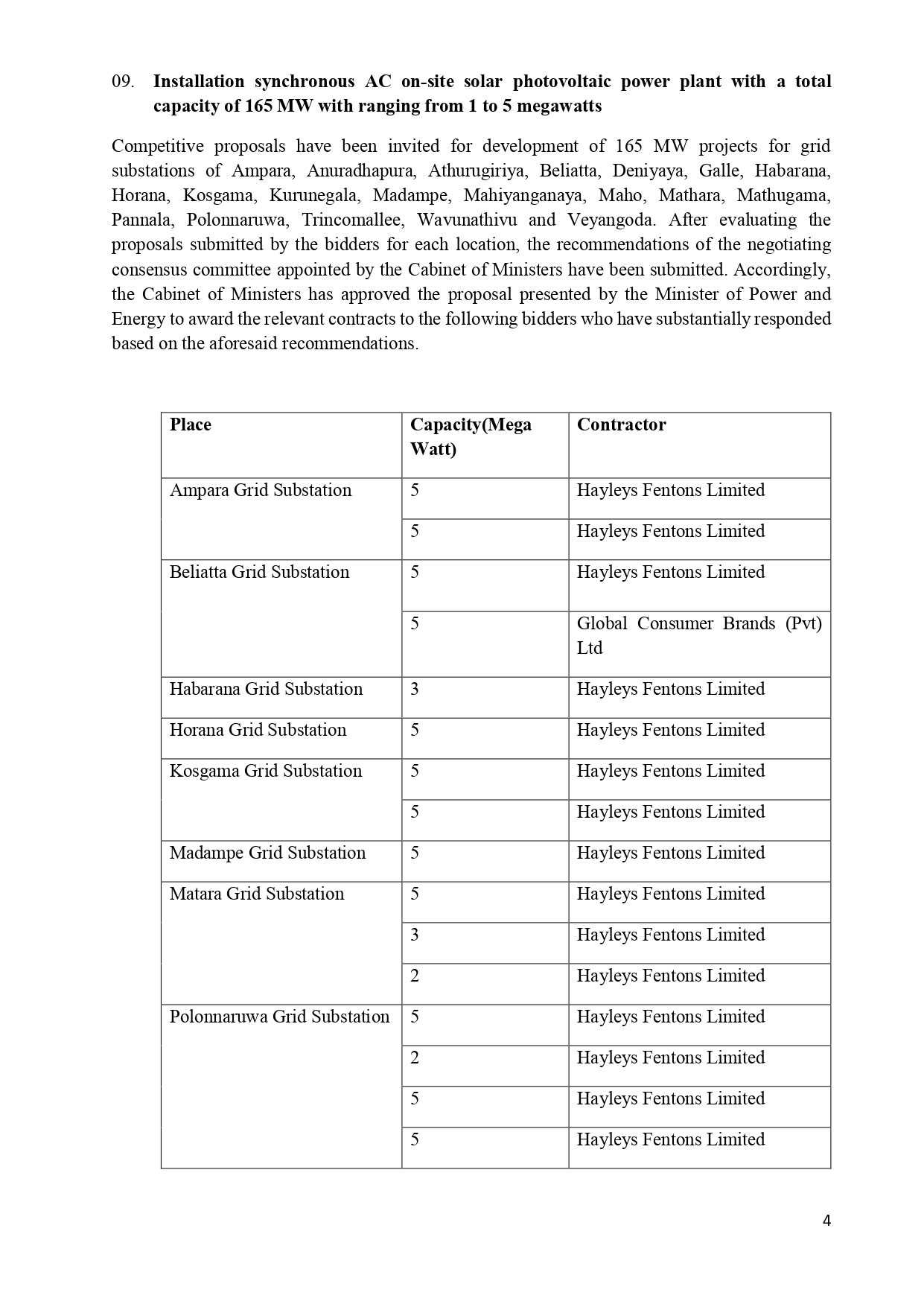
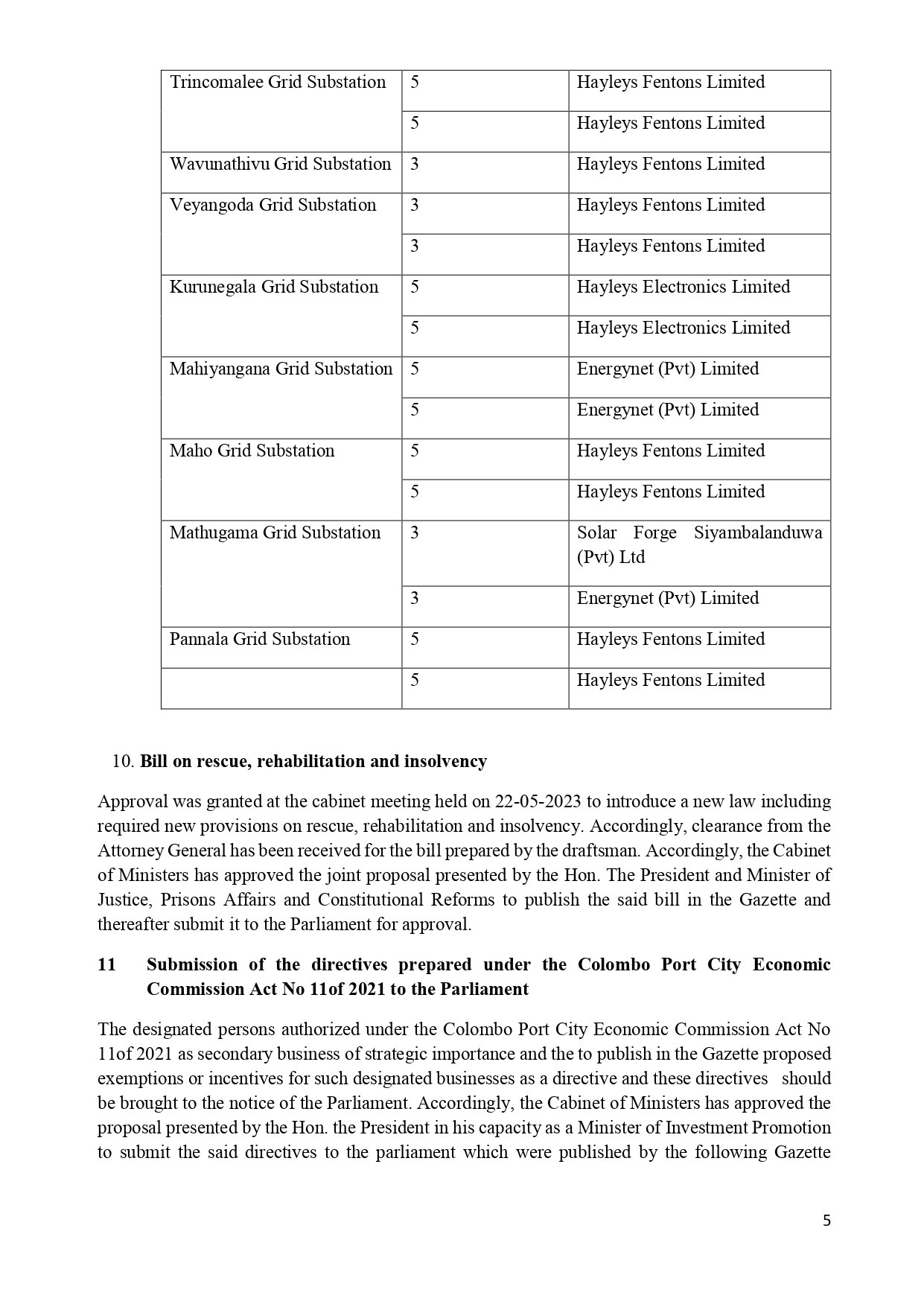
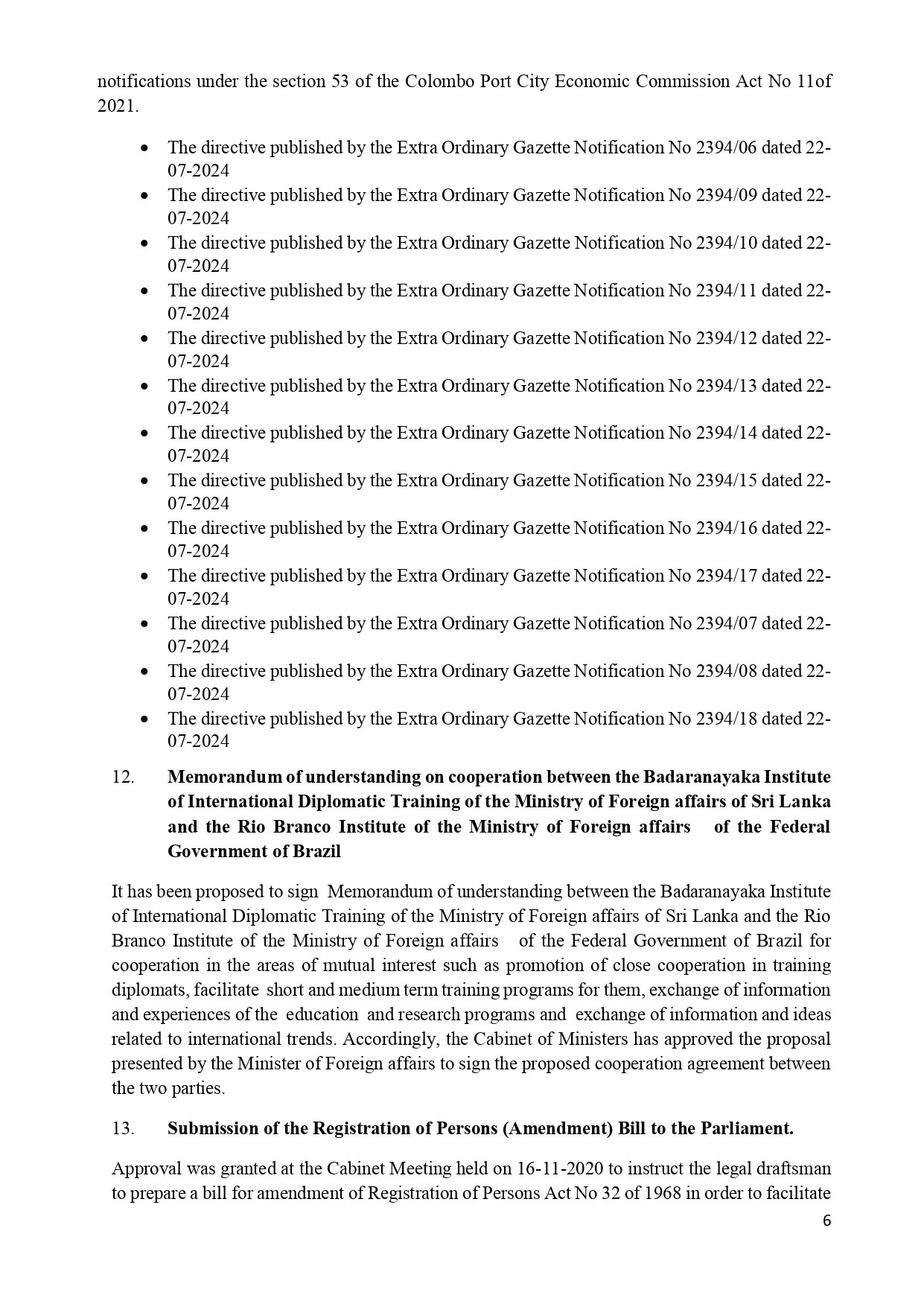
Cabinet Decisions taken at the cabinet Meeting conducted on 05.01.2026

Jan 07, 2026
Cabinet Decisions taken at 05.01.2026 Next article: Cabinet Decisions Next

Sri Lanka Foundation Institute (SLFI) launches its new website

Jan 02, 2026
The official website of the Sri Lanka Foundation Institute (SLFI), featuring new…

New Year Message from the Hon. Prime Minister

Jan 01, 2026
As we move forward to the New Year of 2026, it is timely to reflect on the year 2025 that…