Latest News

President Anura Kumara Dissanayake, who is in New York to attend the 80th Session of the United Nations General Assembly, met with UN Secretary-General António Guterres at the United Nations Headquarters on 25th afternoon.

The Secretary-General warmly received the President upon his arrival at the UN Headquarters, after which the two leaders held a cordial discussion.

During the meeting, President Dissanayake outlined the progress of Sri Lanka’s new economic reforms as well as key government initiatives aimed at advancing the country’s economic, social and political development.

The Secretary-General commended the Sri Lankan government’s new progressive programme, affirming that the United Nations stands in support of it and extends its full cooperation.

Minister of Foreign Affairs, Foreign Employment and Tourism Vijitha Herath, Sri Lanka’s Permanent Representative to the United Nations, former Chief Justice and President’s Counsel Jayantha Jayasuriya, along with senior officials from the Ministry of Foreign Affairs, also participated in the meeting.


President Anura Kumara Dissanayake addressing the 80th session of the United Nations General Assembly, urged world leaders to commit themselves wholeheartedly to building a safe world for future generations. The President stressed that nations must walk hand in hand, not apart.

Speaking at the UN Headquarters in New York on the 25th morning Sri Lanka time, the President expressed deep concern over the ongoing humanitarian catastrophe in the Gaza Strip. He called for an immediate ceasefire, the unhindered delivery of humanitarian aid and the release of hostages by all parties, in line with agreements reached by the United Nations and other stakeholders. He further emphasised that strong international pressure must be applied to halt the continuing violence and killings.

Furthermore, President Dissanayake emphasised in his address the issue of poverty, which has led to numerous global challenges. He asserted that both inequality and poverty ought to be regarded as a worldwide catastrophe that requires urgent attention.

The President emphasised the constructive measures implemented by Sri Lanka to address the global drug issue, a multifaceted challenge impacting millions worldwide. He urged world leaders to collaborate in advancing the global initiative aimed at eradicating the drug menace, which endangers global health, democracy, politics and the overall well-being of society. He proposed stricter enforcement of laws against traffickers, limiting their ability to migrate across borders and establishing more rehabilitation centers for drug addicts.

Turning to corruption, President Dissanayake described it as a destructive force that undermines development, democracy and social well-being while perpetuating poverty. He noted that Sri Lanka has already embarked on this difficult but essential fight for the sake of future generations and urged all countries to embed the culture of anti-corruption within their governance.

Concluding, the President said that the Sri Lankan people, who have chosen the path of light over darkness, are united around the vision of “A Thriving Nation – A Beautiful Life.” He explained that this historic goal is being advanced step by step through corruption-free and ethical governance, poverty eradication, digitalisation and environmental sustainability, with equal emphasis on strengthening education and healthcare.

Excerpts of the speech delivered by President Anura Kumara Dissanayake at the 80th Session of the United Nations General Assembly is as follows: Allow me, Madame Annalena Baerbock, representing the beautiful country of Germany, to begin my speech by offering my warmest congratulations to you on being elected the President of the 80th session of this organisation, formed with the noble aim of bringing about a just and lasting peace among the nations of the world.

“I would also like to use this opportunity to express my country’s appreciation to Philemon Young for the exceptional leadership he provided during the 79th session. We are gathered here today to plan the future path of this organisation, which has worked tirelessly for eight decades to bring about a world of peace.

“It is my honour to address this August Assembly for the first time as the President of Sri Lanka.

As representatives of nations, we all bear the responsibility to work towards fulfilling the aspirations of our people. The decisions we make now will impact people across the world and play a decisive role in the future of this planet, our common home.

“Our decisions will have a very important impact on our future. Poverty, a tragedy as old as human civilisation, has accompanied humankind on its journey through time. For centuries, countries across the world have faced this painful and relentless struggle. Poverty and problems stemming from it are also casting an oppressive shadow on our future.This assembly must pay special attention to eradicate extreme poverty. I believe our conscience dictates us to do so.

For centuries, many countries in the world are struggling against poverty. Poverty is a terrible enemy with many faces. Even as we gather here in the countries we represent, including in my own, children are suffering from hunger. A child’s right to education is an internationally accepted fundamental right.

“This right is enshrined in the constitutions of most of our nations. Yet, across the world, poverty has denied this right to hundreds of thousands of children. In a world which boasts of its technological advances, how can there be children without access to education? Education is the foundation of every great nation.

“It is the most vital factor deciding one’s future. We firmly believe that investment in education is an investment in global progress. Many developing countries are constrained in their struggle against poverty by indebtedness.

“Low-income countries allocate twice as much on debt servicing than on education or healthcare.

Our people and our countries are caught in debt traps. The 2030 Agenda for Sustainable Development pledges to leave no one behind and to reach the last first.The Agenda acknowledges the most critical challenge before the world is the challenge to end poverty.

I would also like to recall the decisions taken at the Global Summit for Social Development in Copenhagen in 1995.

“However, wars and political upheavals and the COVID pandemic have obstructed the fulfilment of these hopeful agendas.I propose to you that the time has come to accept that inequality and poverty are a global catastrophe and we should act accordingly.

Drugs and organised crimes linked to drugs have become a serious concern to this world. This has been acknowledged in the World Drug Report 2025 published by the United Nations Office on Drugs and Crime.

The drug problem is a complex issue affecting millions of people globally. The market for drugs and the related criminal organisations are creating issues globally. Drug cartels are turning entire states into their hunting grounds.They pose a major threat to global health and politics and eventually global well-being as well.

“While Sri Lanka is taking effective steps to address this challenge, I respectfully request all of you to join in the effort to implement the global agenda on drugs and crime.

“I bring to your notice the need to implement the law strictly against these drug traffickers and prevent drug traffickers from taking refuge in our countries and also to set up rehabilitation centres for rehabilitation purposes.

“We regard corruption as an epidemic causing widespread harm to broad swathes of society. We believe corruption to be an obstruction for development, a decisive threat to democracy and global well-being and also a cause for poverty. Let me remind you that fighting corruption is dangerous, but not fighting corruption is even more dangerous.

The Universal Declaration of Human Rights of 1948 was a remarkable victory for the people of the world. Civilisational achievements were never accomplished overnight. They were all results of unwavering efforts and sacrifices.And the struggle against corruption is also a difficult one. We must take the necessary steps here. The first step may be difficult, but if the courageous first step we take is correct, a thousand steps will follow.That is what I believe. Sri Javaharlal Nehru has once stated so. I represent a small island of nearly 22 million people. Sri Lanka’s population is about 0.30 of the global population.It is true that we are small in size and in numbers, yet we have begun the struggle against corruption for the future generations of our country and the world. I propose that an integral part of the culture of all UN member countries should be to fight against corruption.

“I feel confident that all of you will join me in condemning war.There is no nation in the world that desires a war. The result of a war is a tragedy wherever it happens. We all know that. Even now, many countries of the world are experiencing the pain of that tragedy. As a country that lived through a three-decade war, we know well the futility of war. No one who sees the pain and the suffering of parents, spouses and children of the victims of war would never dream of another war.

“We have witnessed these painful sights with our own eyes. Even as suffering caused by conflict has reached unprecedented levels, the international community has become reduced to bystanders.

“Opportunistic power politics has turned the lives of children and innocent civilians into a game.No one has the right to inflict pain and suffering on another to enhance one’s own power. The duty of a ruler is not to destroy lives but to protect them.

“We are deeply distressed by the ongoing catastrophe in the Gaza Strip.Gaza has been turned into an open prison full of pain and suffering, echoing with the cries of children and the innocent civilians. The United Nations Organisation and all related parties must work towards an immediate ceasefire, enable adequate humanitarian aid to these areas and to ensure the release of hostages of all parties. We recognise the Palestinian people’s inalienable right to their own state.

We also believe that legal, security and humanitarian concerns of Israel and Palestinian people need to be acknowledged.

Sri Lanka reiterates the importance of early implementation of the UN General Assembly resolutions regarding a two-state solution on the basis of the 1967 borders. The time has come for the international community to stop being a mere spectator and to move decisively to end the suffering of millions.

“Religious extremism and racism have been major causes of wars and conflicts, bringing suffering to millions of people. Although a century has passed since the abolition of slavery, the poison of racism still lingers in many places. Extremist and racist ideas are as deadly as epidemics.We must ask ourselves how these extremist and racist ideas survive like sparks under the ashes in a world that has witnessed so many advances on so many fronts.

“I believe that we must awaken our conscience to oppose racism and religious extremism in protection of human rights and freedoms. We must be brave enough to speak up for peace. We must not be afraid to speak up against war. We must be afraid to speak up for war. In a world where millions of children die of hunger, we spend millions on weapons.When tens of millions die of inadequate health facilities, hundreds of millions are spent on futile wars. When hundreds of thousands of children are denied the right to an education, millions are spent on invading another’s land.


“If every inch of this world can be turned into peaceful communities, what a wonderful world would it be. As a country that suffered the horrors of war for decades, where families still weep in remembrance of their loved ones, we have a duty to make that heartfelt proposal.

I would like to remind you that at the last election, the people of Sri Lanka decided in favour of a centuries-old dream. A legislature has been established according to that decision, reflecting the ethnic and religious diversity of the country.

“A parliament has been established with women and other marginalised communities in representation. We believe that the duty of legislatures is to develop the country and the people, not to develop themselves. And we have established that idea.

“Our people have chosen light over darkness. They have given their approval to realise the vision of a thriving nation, a beautiful life. To fulfill this historic mandate, we have focused on establishing non-corrupt administration, poverty eradication, and digitalisation.And we have also placed great emphasis on education health as well. We are moving towards these goals step by step. Digital democracy is one of our aims. Ensuring that every person and every country can enjoy the opportunities of the digital age is a global challenge. If we succeed in our task, we will be able to open doors to technology, accelerate development, and to strengthen governance. If we fail, technology will turn into one more force, worsening inequality, insecurity, and injustice.

The digital gap between states that can and cannot establish access to digital tools is clear. An even greater gap is being created in relation to Artificial Intelligence. Sri Lanka and many other developing nations in Asia and also many other nations are facing challenges in using AI as a development tool due to the inadequate infrastructure facilities.I ask the international community to work together and we have to develop a dignified society, a dignified world. I present this August assembly a proposal to set up a neutral sovereign Artificial Intelligence zone. We must build a new and better world, a world which represents the dignity of humankind.You as members of this assembly must be the architects of that better world.“As President Harry Truman stated on the occasion of founding the United Nations, in your hands rests our future. We must not act in fear or under compulsion, but with hope for a better and more secure world.Today we must commit ourselves not to lead the world to another disaster, but to make it a better place for the next generation. “I have dreams and expectations for my country. Similarly, you have dreams and expectations for your countries. My dream is to ensure that my people are rich and they have happiness. I believe that you too have such dreams. We must try to achieve these dreams not in competition with each other, but by working arm in arm, peace, dignity, and equality on a healthy planet.That is the motto of the United Nations organisation.Therefore, let us become the true healers of the world,”the President said.


Health and Mass Media Minister Dr. Nalinda Jayatissa pointed out that construction of a first-class post office building will be carried out in the Batticaloa district after 35 years.

In line with the Government’s policy statement, themed ‘A Rich Country, a Beautiful Life’ the Government has implemented a programme to develop the physical and human resources of the postal service operating in the country, which has a history of over 200 years, by innovating it.

Accordingly, the foundation stone for the construction of the new Kalawanchikudi Post Office building in the Batticaloa District of the Eastern Province at a cost of Rs. 29.5 million was laid with the presence of Health and Mass Media Minister on Thursday (18). The construction work is being carried out with the financial provisions from the Postal Department.

The Minister said that construction of a grade-one post office building will commence today in the Kalawanchikudi area of the Batticaloa district, after 35 years due to the failure of previous Governments to improve the postal service.

He said that construction of the buildings will begin from the moment the foundation stone is laid, and that the building will be opened to the public in December this year, providing services to over 9,000 people in this area.

The Minister emphasised that the Government will allocate funds for the modernisation of existing post offices and sub-post offices, and that a significant amount will be allocated for the development of the postal service in the upcoming budget.

Recalling that in the past, postal employees used their personal technical devices to maintain the service without allowing it to collapse due to insufficient physical resources required for the postal service, the Minister pointed out that Rs. 200 million has been allocated for the purchase of new lorries, cabs, as well as laptops and desktop computers, and that steps will be taken to recruit staff for various grades and promote staff grades.

He stated that there is no room for racism under the new Government, and that the people of Batticaloa, as well as the entire country, will live in harmony, enjoying democracy without racial discrimination, and that any attempt to incite racism and religious conflicts will not be tolerated and that the law will be enforced if there are people who engage in such activities.

The previous Governments had not taken steps to construct new post offices since 2016, and this is the fifth post office building for which the foundation stone was laid by the Government after coming to power. The Government has allocated Rs. 600 million for new construction in the Postal Department this year, and arrangements have been made to construct 20 post office buildings. The vision of the Sri Lanka Postal Department is to be the best relationship partner by providing modernised and multifaceted services.

EP Governor Professor Jayanthalal Ratnasekera, Batticaloa District Parliamentarian Kandasamy Prabhu, Kalawanchikudi Pradeshiya Sabha Chairman Megasundaram Vinoraj, Secretary U. Udayasreedhar, Deputy Postmaster (Development) Thusitha Hulangama, Deputy Postmaster (Eastern Province) S. Prakas, Batticaloa District Postal Superintendent S. Jagan, Kalawanchikudi Postmaster R.U.T. Romesh and staff were also present.

Health and Mass Media Minister Dr. Nalinda Jayatissa stated that the Government had to spend an extra Rs.30 billion (more than double the estimated cost) to complete 17 projects in the health sector that have been halted mid-way or delayed in the past.

The Minister said the Government currently has to bear a cost of Rs.59 billion for the 17 projects, and that if those projects had been completed within the stipulated time frame, those projects could have been made vested with the public for Rs. 29 billion.

The Minister was speaking at a ceremony to inaugurate infrastructure and physical development at the Ampara District Hospital recently. Accordingly, steps were taken to restart several development projects at the hospital that had been halted.

Accordingly, the construction work that commenced on the new Accident and Emergency Unit (A&E) at a financial cost of Rs.950 million and the Catheterisation Laboratory Unit Complex at a project cost of Rs. 354 million was inspected by the Health and Mass Media Minister.

These projects are scheduled to be completed in 2026. In addition, the project to improve the internal road system of the Ampara Hospital was also initiated, and the newly provided ambulance with modern facilities and the mobile laboratory vehicle were also donated to the hospital.

Addressing the ceremony held afterwards, Minister Jayatissa said that since the Ampara District Hospital provides healthcare services to around 800,000 people in the Ampara District and a large number of people in the surrounding areas, steps will be taken to upgrade the hospital to a higher level.

Accordingly, the Minister also pointed out that plans were made to resume the construction of the Emergency and Response Unit and the Catheterisation Laboratory Unit, which had been halted in the past, and to complete those projects within a stipulated time.

The Minister emphasised, if the construction of the Accident and Emergency Unit had been completed within the stipulated time, the Government would have had to spend Rs. 873 million, and to complete the re-started project, it would have to incur a cost of double that amount, Rs. 1589 million.

The Minister also said if the Catheterisation Laboratory Unit Complex project was completed within the stipulated time it would have cost only Rs.354 million, and now the Government will have to incur a cost of Rs. 720 million to restart work and complete the project.

The Health and Mass Media Ministry has announced that all individuals and institutions operating cable or satellite (DTH) television broadcasting stations without a valid licence will be given a grace period until November 30, 2025 to obtain proper authorisation.

According to Secretary to the Ministry of Health and Mass Media, Dr. Anil Jasinghe, it is mandatory for operators to possess a valid broadcasting license issued under their name by both the Health and Mass Media Ministry and the Telecommunications Regulatory Commission of Sri Lanka (TRCSL) to legally function as a cable or satellite TV operator, whether for personal or business purposes.

Dr. Jasinghe further emphasised that maintaining a television broadcasting station without such a licence is an offence under Section 28 of the Sri Lanka Rupavahini Corporation Act No. 6 of 1982.

He also noted that the import, production, sale, rental, renovation, or distribution of related broadcasting equipment without proper authorisation is strictly illegal under Sri Lankan law.

“The licence issued to an individual or organisation cannot be handed over or transferred to a third party,” Dr. Jasinghe added. “We also wish to remind the public that entering into agreements with illegal broadcasting operators will render such agreements null and void before the law.”

The Ministry warned that any satellite or cable-based broadcasting station operating without a valid licence after the deadline will face legal action. Application forms for licences are available at the Health and Mass Media Ministry or can be downloaded from the official website www.media.gov.lk.

President Anura Kumara Dissanayake will leave for the United States of America tonight.

The President is expected to participate in the 80th Session of the United Nations General Assembly. He will address the General Assembly at 3.15 p.m. US time on Wednesday (24).

President Anura Kumara Dissanayake is also due to hold bilateral discussions with the United Nations Secretary-General and several world leaders.

The Ministry of Foreign Affairs, Foreign Employment and Tourism today (22) announced that President Anura Kumara Dissanayake will undertake an official visit to Japan from September 27 to 30, 2025, at the invitation of the Government of Japan.

During the visit, President Dissanayake will have an audience with His Majesty the Emperor of Japan and hold a summit meeting with the Japanese Prime Minister to discuss a wide range of issues of mutual interest.

As part of his official program, the President will address a Business Forum in Tokyo attended by leading Japanese businesses and investors, focusing on emerging economic opportunities in Sri Lanka. He will also participate in “EXPO 2025 Osaka” as a Guest of the Government of Japan on the occasion of Sri Lanka Day, an event that will showcase the country’s cultural heritage and economic potential to a global audience.

President Dissanayake is also scheduled to meet with members of the Sri Lankan expatriate community residing in Japan.

The President will be accompanied by the Minister of Foreign Affairs, Foreign Employment and Tourism Vijitha Herath, along with senior government officials.

The Ministry noted that this visit is expected to further consolidate and deepen the longstanding bonds of friendship and cooperation between Sri Lanka and Japan.

President Anura Kumara Dissanayake stated that in order to advance the country economically, it is essential to ensure efficiency and transparency across all sectors. He further noted that the current Government’s digitalisation programme is designed to elevate Sri Lanka not only economically but also socially.

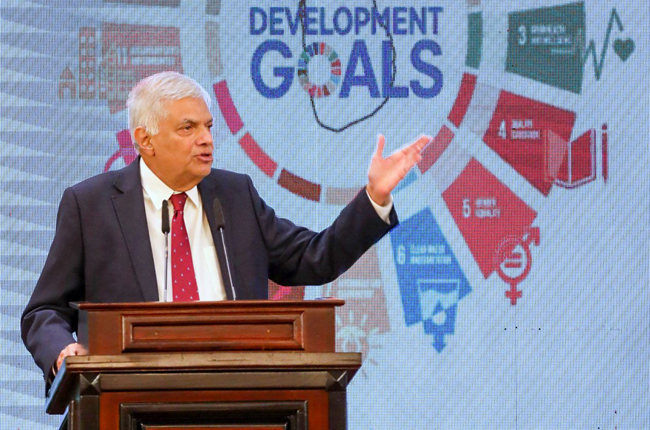
The President made these remarks while participating in the ceremony held at the Bandaranaike Memorial International Conference Hall (BMICH), Colombo, to launch the National Cyber Protection Strategy (2025–2029) and to open the National Cyber Security Operations Centre (NCSOC) yesterday (19).

The Sri Lanka Computer Emergency Readiness Team (Sri Lanka CERT), in collaboration with the Digital Economy Ministry and with the technical support of the World Bank, has introduced the National Cyber Protection Strategy 2025–2029. This initiative aims to establish a secure, reliable and inclusive digital ecosystem as a significant step in the country’s digital economic transformation programme.

The strategy envisions the establishment of the necessary legal and administrative framework forcyber security, the creation of a skilled workforce equipped with knowledge and expertise in cyber security and the enhancement of public awareness, including among schoolchildren. It also seeks to improve the preparedness of state institutions, strengthen the capacity of Sri Lanka CERT, protect institutions that manage critical digital infrastructure and foster collaboration with multiple stakeholders to create a secure cyberspace.

The National Cyber Security Operations Centre, inaugurated today, will provide 24-hour monitoring of 37 institutions managing critical digital infrastructure, including the Department of Immigration and Emigration, the Department of Motor Traffic and the Department of Inland Revenue, in order to identify and respond to potential cyber-attacks. Its mandate includes the continuous monitoring of cyber threats, risks and attacks, issuing immediate alerts to relevant parties and protecting government systems and public digital services. The centre will also support both state institutions and the private sector to ensure safe digital operations by strengthening system resilience, providing early warnings, ensuring swift responses to threats and raising awareness. The benefits of the centre include continuity of operations, rapid response, cost-effectiveness, compliance and trust.

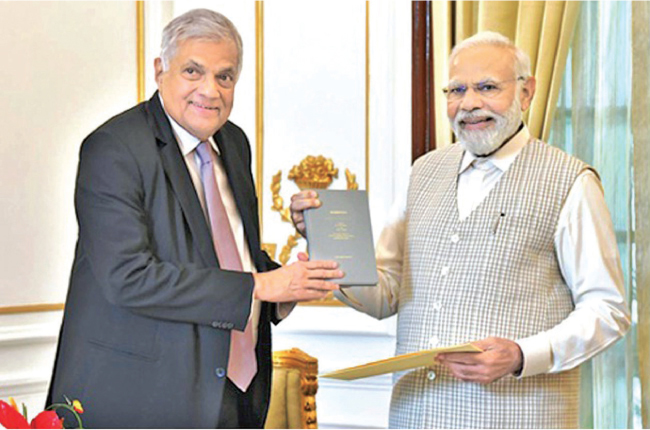
The National Cyber Protection Strategy (2025–2029) was formally presented to President Anura Kumara Dissanayake, who also serves as the Minister of Digital Economy, by the Deputy Minister of Digital Economy, Eranga Weeraratne.

Addressing the gathering, the President further observed that countries capable of swiftly harnessing advances in science and technology achieve rapid progress. He emphasised that the national cyber security framework will play a crucial role in safeguarding national security, strengthening the economy and protecting citizens’ way of life.

Commenting further, President Anura Kumara Dissanayake said that today marks the beginning of a significant undertaking. He noted that what has been opened is not merely a building or an office. If Sri Lanka is to pursue a strong path of digitalisation, he stressed, security, resilience and reliability are indispensable. The cyber security system inaugurated today is therefore a vital milestone in Sri Lanka’s digital economic journey.

Whether considering politics or the global economic trajectory, the key factor is that countries able to rapidly absorb technological and scientific advancements move swiftly toward the forefront of development. Conversely, states that fail to adopt these advances are increasingly left behind. This, I believe, is the core of the crisis currently facing Sri Lanka.

We all know that many ideas and concepts were generated in the 16th and 17th centuries, yet most of them only became a reality in the 20th century. Advances in health, the emergence of democratic elections allowing people to choose their leaders in a world once dominated by royal hierarchies and new forms of human interaction all came into practical existence during this period. Similarly, the digitalized world began to assume a major role from the late 20th century onward.

We are faced with two possible paths. The first is to rapidly embrace digitalization and transform it into a practical reality, enabling us to progress in step with advanced nations. The alternative

failing to adopt these technological advancements will only widen the gap between us and the rest of the world.

The knowledge, tools and systems enabled by modern technology must be swiftly integrated into our state. For this reason, digitalization has been recognized as a priority programme of the government, with scholars and professionals contributing their expertise and dedication to its advancement.

Transparency is equally crucial. Our state machinery currently faces a profound crisis in transparency, affecting areas such as procurement, grants, recruitment and policy decisions.

Digitalization, therefore, plays a vital role in establishing and ensuring this transparency.

Moreover,digitalization is essential not only for meeting human needs but also for creating new markets and economic opportunities. Through digitalization, businesses can access and capture emerging markets. Recent successes in both public and private institutions demonstrate that such innovations have led to the creation of new markets. Therefore, digitalization holds significant importance for the business sector as well.

For a country to progress economically, social life must be made efficient and this is achieved through the digital economy. Rather than living a constrained life, digitalization provides tools that allow daily needs to be met freely and conveniently. Therefore, whether in public service, the business sector or among ordinary citizens, digitalization should become the central strategy of our economy.

Some express concern that people might become like machines and lose their human emotions.This is not the case. Humans are naturally emotional and socially connected. The path forward lies in creating a robust network to prevent potential risks and this network can be built using technology itself. It must continue to be developed, as the knowledge gained today is generating new knowledge, driving rapid transformation. This is a dynamic process. In the past, threats could be countered by building walls, but cyber-security is not a static wall, it must continuously confront and mitigate threats. Therefore, the national cyber-security system is crucial for safeguarding national security, the economy and the daily lives of citizens. Appreciation is extended to all scholars and professionals who have contributed to this effort and congratulations are offered for advancing these initiatives with even greater strength.

In line with the government’s policy theme, “A Rich Country, a Beautiful Life”, an urgent program has been launched to modernize Sri Lanka’s postal service, which has a history spanning over 200 years, and to develop both its physical and human resources.

As part of this initiative, the foundation stone for a new Kaluwanchikudy Post Office in Batticaloa District, Eastern Province, was laid yesterday (18) at a cost of Rs. 29.5 million, under the patronage of Minister of Health and Mass Media, Dr. Nalinda Jayatissa. The construction will commence immediately, with the building expected to open to the public by December 2025, serving over 9,000 residents.

Minister Jayatissa emphasized that this marks the first post office construction in the Kaluwanchikudy area in 35 years, highlighting the current government’s commitment to postal modernization after past administrations failed to act. In addition, Rs. 200 million has been allocated for new vehicles, laptops, desktops, and recruitment to strengthen the workforce.

The Minister further stressed that the government upholds racial harmony and democracy, ensuring strict action against any attempts to incite racial or religious conflicts.

This project is part of a broader plan, with Rs. 600 million allocated this year to construct 20 new post office buildings nationwide, reinforcing the vision of the Sri Lanka Postal Department to become a leading service provider through innovative and multifaceted offerings.

Sri Lanka’s third nanosatellite, developed with the technical contribution of local engineers, is set to be launched into orbit tomorrow (19), according to the Arthur C. Clarke Institute in Moratuwa.

Named ‘Birds–X Dragonfly’, the satellite was transported to the International Space Station (ISS) on August 24 via NASA’s SPX-33 rocket mission. It is scheduled for deployment into orbit from the ISS at 2:15 p.m. tomorrow.

Sri Lanka entered the space era in 2019 with the launch of ‘Ravan-1’, followed by ‘Kitsune’ in 2022, developed under a multinational cooperation project. The Birds–X Dragonfly marks the latest milestone in Sri Lanka’s growing participation in space technology.

The government’s film sector, which has grown and evolved since 1949, deserves due recognition, said the Minister of Mass Media Dr Nalinda Jayathissa.

He expressed these views this afternoon (16) at the inauguration of the renovated Film and Digital Archive Unit of the Government Information Department.

The Minister further stressed that such facilities should be made available to school children and youth, enabling them to explore and appreciate the nation’s cinematic legacy.

Since its establishment on September 17, 1949, the government film sector has preserved a wealth of invaluable works produced through cinema, DVDs, and digital media, which are carefully safeguarded at the Archive Unit.

Commenting on the renovation, Minister Jayatissa noted that although the project was initially estimated at Rs. 19 million, the fully-equipped archive unit was successfully completed at a cost of only about Rs. 6 million and it's significant saving for the government.

Page 9 of 123

Latest News

I extend my greetings to all sisters and daughters in Sri Lanka and around the globe on the occasion of International Women’s Day - PM

Mar 08, 2026
This year, the United Nations has declared the global theme for International Women’s Day…

International Women’s Day Message - President

Mar 08, 2026
International Women’s Day has been celebrated annually across the world on 8 March for…

Dr. Victor Rathnayake is a priceless treasure to our nation. — Prime Minister Dr. Harini Amarasuriya

Feb 25, 2026
The contribution made by Victor Rathnayake to Sri Lanka’s musical landscape is…

Cabinet Decisions

Feb 25, 2026

Postal Dept. aiming to achieve Rs. 15,000 mln revenue target this year – Minister

Feb 24, 2026
The Postal Department has the potential to easily generate an income of Rs. 15,000…

Media Accreditation Process Streamlined to 4,700 Following Formal Review

Feb 20, 2026
Director General of Government Information, Mr. H.S.K.J. Bandara, stated that following a…

1,000 Postal Substitutes to be Absorbed into Permanent Service

Feb 20, 2026
Minister of Health and Media, Dr. Nalinda Jayatissa, announced in Parliament yesterday…

Cabinet Decisions

Feb 17, 2026
Cabinet Decisions taken at the Cabinet Meeting held on 16-02.2026 Accelerating the…

Government to Establish Chartered Institute for Journalists’ Welfare

Feb 17, 2026
The Deputy Minister made these remarks in Parliament today (17), responding to an oral…

Modernizing Post: Rs. 59Cr Investment to Speed Up Island-wide Delivery

Feb 13, 2026
Ten new lorries and 20 crew cabs, valued at approximately 590 million rupees (59 Crores),…