Latest News

Eid-ul-Fitr, celebrated by Muslims worldwide after a month of fasting and upon sighting the new moon, holds great significance in the Islamic religious calendar.

Fasting during Ramadan, one of the five pillars of Islam, embodies the values of sacrifice, self-discipline and simplicity by distancing oneself from worldly desires. This period serves as a reminder of the importance of generosity towards those suffering from hunger and as an opportunity for self-restraint and spiritual growth, which devout Muslims deeply cherish.

As Sri Lanka undergoes various social, economic and political transformations, the teachings of Islam provide an excellent example for building a society rooted in freedom, equality, solidarity and human dignity. I strongly believe that these values serve as guiding principles in our collective journey toward a just and harmonious nation.

Furthermore, as we strive to foster a responsible and ethical political culture, one that values accountability over corruption and the misuse of public resources, the principles of self-restraint and sacrifice emphasized during Ramadan offer an inspiring model. They remind us of the need to cultivate a governance system that is sensitive to the aspirations and well-being of its people.
Eid-ul-Fitr is a celebration that transcends religious boundaries, promoting unity, compassion and selflessness. On this auspicious occasion, I extend my heartfelt wishes to all Sri Lankan and global Muslim communities.

May this Eid-ul-Fitr bring peace, reconciliation and the fulfillment of our shared hopes for a new era of renewal and prosperity.
Eid Mubarak!

As our Islamic brothers and sisters in Sri Lanka and around the world celebrate the sacred month of Ramadan, I extend my heartfelt greetings and best wishes for peace, prosperity, and spiritual fulfillment.

Ramadan is a time of deep reflection, prayer, and self-discipline. It is a period that teaches us the values of compassion, generosity, and unity. Fasting during this holy month is not only an act of devotion but also a reminder of the struggles faced by those less fortunate. It is a time to cultivate patience, humility, and gratitude while strengthening our bonds with family, friends, and the community.

At its core, Ramadan embodies the spirit of kindness, forgiveness, and charity. The practice of Zakat and Sadaqah during this time highlights the importance of sharing with those in need and reinforcing the principle that true prosperity lies in giving and uplifting others. These values are universal and resonate deeply with all communities, fostering harmony and understanding among people of different faiths and backgrounds.

Sri Lanka is a nation rich in diversity, and it is through mutual respect and solidarity that we continue to strengthen our collective future. The spirit of Ramadan reminds us of the need for coexistence, tolerance, and the pursuit of justice and peace.

As the month of fasting culminates in the joyous celebration of Eid, let us carry forward the lessons of Ramadan—compassion, unity, and selflessness—into our daily lives. May this blessed month bring peace to our hearts, our homes, and our nation.

Ramadan Mubarak!

Dr.Harini Amarasuriya
Prime Minister
Democratic Socialist Republic of Sri Lanka

A delegation from the Global Fund met with Sri Lanka’s Minister of Health and Mass Media, Dr. Nalinda Jayatissa at the Ministry of Health and Mass Media, on Monday (25), to discuss the country’s Tuberculosis (TB) and HIV/AIDS programmes and their current progress.

The Global Fund representatives arrived in Sri Lanka on March 24 with the primary objective of assessing the progress of the country’s Health programmes related to TB and HIV/AIDS. Additionally, the delegation aimed to review the Health Information and Quality Improvement (HIQI) project, the COVID-19 Response Mechanism (C19RM) Investment programmes, and other ongoing Health initiatives.

During the discussion, the Global Fund officials also highlighted their plans to strengthen Sri Lanka’s Healthcare system by meeting key stakeholders, including Government representatives and donors. They emphasised the implementation of the Global Fund’s 7th Grant Cycle (GC7) for TB and HIV/AIDS, as well as enhancing Digital Health services and Investment mechanisms for Pandemic preparedness.

Minister Dr. Nalinda Jayatissa expressed his gratitude to the Global Fund for its over 20 years of continuous support, particularly in combating HIV/AIDS, TB, and Malaria in Sri Lanka. He acknowledged the Fund’s role in mobilising resources to improve Disease Prevention and Treatment and strengthening the Healthcare system.

The Global Fund, established in 2002, is a key international financing organisation dedicated to combating AIDS, TB, and Malaria. It provides financial support to eligible countries, helping them implement Health programmes that improve access to Treatment, Prevention, and Care.

Secretary to the Ministry of Health and Mass Media Dr. Anil Jasinghe, Director General of Health Services Dr. Asela Gunawardena, Deputy Director General (Public Health Services 1) S.M. Arnold, Global Fund Portfolio Manager Sylwia Murray, Global Fund Specialist in Health Product Management Luckson Sichamba, Global Fund Digital Services Manager for Country Programmes, Robert Cryer, Director of Technology & Financial Transformation and Deloitte Project Manager Asanka Wasalathilaka and Executive Secretary and Monitoring Officer of Sri Lanka’s Global Fund Coordination Mechanism Dr. Kanthi Ariyarathna also participated in this discussion.

A meeting between the Thai Ambassador to Sri Lanka, Paitoon Mahapannaporn, and the Minister of Health and Mass Media, Dr. Nalinda Jayatissa, was recently held at the Ministry of Health and Mass Media to discuss bilateral cooperation.

The Thai Ambassador commended Sri Lanka’s initiatives in the health sector and assured continued support from the Thai government to enhance healthcare services.

In celebration of the 70th anniversary of diplomatic relations between Thailand and Sri Lanka, a special project focusing on orthopedic skill development at the Kandy National Hospital will be launched.

This initiative aims to facilitate surgical procedures while promoting knowledge exchange between Thai and Sri Lankan orthopedic surgeons.

Discussions also covered boosting Thai investment in Sri Lanka and sharing Thailand’s expertise in tourism development.

The Thai Ambassador pledged support to promote Sri Lanka as a prime destination for Thai tourists, particularly highlighting the country’s rich Buddhist heritage.

The meeting reaffirmed the strong ties between the two nations and underscored commitments to collaboration in key areas such as health, trade, investment, and tourism.

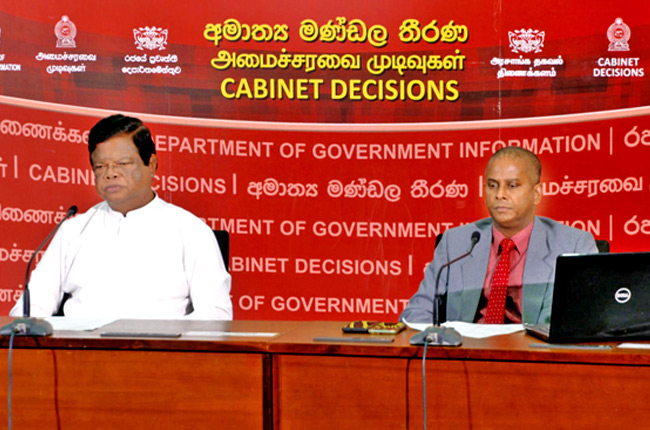
Minister Nalinda Jayatissa has clarified that no decision has been made to merge the Independent Television Network (ITN), Sri Lanka Rupavahini Corporation, and the Sri Lanka Broadcasting Corporation (SLBC).

He emphasized that the government plans to modernize these institutions individually and transform them into profit-generating entities.

The Minister made these statements during a media briefing held Yesterday to announce the latest cabinet decisions.

Vimukthika Kariyawasam has been appointed as the News Director of the Sri Lanka Rupavahini Corporation(SLRC).

Vimukthika Kariyawasam, a graduate of the University of Colombo, joined the National Television in 1997 as a trainee producer.

She has also contributed to the production of various programs of SLRC and has later served as the Acting Deputy News Director Sinhala News and Assistant Director of Regional News.

Vimukthika Kariyawasam is an alumna of Mount Lavinia Buddhist Girls’ College and a graduate of the University of Colombo in Social Sciences.

She received her Dhamma education from the Sri Siddhartha Dhamma School of the Parama Dhamma Chethiya Pirivena in Ratmalana and has served as a student leader and the leader of the debate team.

Along with her Bachelor of Social Sciences degree from the University of Colombo, Vimukthika Kariyawasam, who studied journalism under the guidance of Venerable J.B. Dissanayake, worked as a news reporter while receiving practical training at the Sri Lanka Television Training Institute, the Journalism College and national newspaper institutions.

  • We Will Not Miss This Opportunity Under Any Circumstance: Steps to be taken to Mark a Crucial Turning Point in the Nation’s Economy
  • Be a Contributor to the Country’s Success, Not a Hindrance Recorded in History

– President tells Parliament

President Anura Kumara Disanayake stated that the National People’s Power (NPP) government has stabilized the economy over the past four months that has instilled confidence in the country’s ability to move toward a prosperous future.

He further noted that the government has achieved numerous economic victories, increased state revenue, and resumed several stalled development projects initiated with foreign assistance, thereby signaling economic stability to the nation.

President Disanayake made these remarks yesterday (21) during the parliamentary debate on the third reading of the budget.

He asserted that those who attempt to disrupt this national progress for political gain will ultimately be rendered irrelevant in politics. He emphasized that the only path available to all politicians in the country today is to align with and support the government’s development agenda.

Additionally, the President stated that the era of media-driven politics has come to an end, arguing that if such an approach were still effective, the current government would not have come to power. He described the present administration as a political movement that remains engaged in continuous dialogue with the people.

Reflecting on past opportunities to rebuild the nation that was squandered, President Disanayake stressed that neither he nor his government would let the current opportunity slip away. He reiterated that their mission will only conclude once the country has been fully rescued from its current challenges.

President Anura Kumara Disanayake stated that neither he nor any minister in the government harbours personal ambitions; instead, their only aspiration is the well-being of the country and its people. He firmly assured that this vision will be realized and invited all members of the opposition to be active participants in the nation’s journey toward success, rather than being remembered in history as obstacles to progress.

Further elaborating on his views, the President remarked:

“This is one of the longest budget debates held in Parliament in recent times. Previously, adequate time was not allocated for such discussions, but we ensured a full-length debate. During this discussion, various points were raised; some out of pain, others out of anger. Some of these concerns were valid. We are not surprised by expressions of pain or anger. When lands in Hanthana are lost, pain is inevitable. It is saddening. The documents related to this matter are available at the Presidential Secretariat. We understand the frustration and outrage. However, we must also be prepared to embrace what is beneficial and reject what is not.

We are a political movement that firmly believes the country’s economic system must undergo a decisive transformation and we are actively working toward that goal. Moreover, we clearly understand how to implement this transformation. If the economy were in a strong and crisis-free state, this shift could happen swiftly. However, given the dire economic situation, the transformation must be carefully planned and executed over time.

Therefore, we fully understand the concerns being raised. For a long time, this country has followed economic policies that have failed to serve its people. Now, we are taking decisive steps to establish an economy that benefits both the country and its citizens. To achieve this transformation, our first priority is to stabilize the economy. An economy burdened by multiple crises cannot withstand sudden, large-scale changes. A vehicle with broken wheels cannot make sharp turns; first, the wheels must be fixed. That is why we are systematically working to steer the economy forward with careful planning.

We inherited a state that was officially declared bankrupt, not just officially, but in reality as well. There was a massive gap between the country’s revenue and expenditure. While the expected total revenue was LKR 4,999 billion, debt interest payments alone required LKR 2,950 billion. Additionally, LKR 1,352 billion was needed for public sector salaries and LKR 442 billion for pension payments. This meant that from the total revenue of LKR 4,990 billion, LKR 4,744 billion was immediately spent on interest, salaries and pensions, leaving only LKR 246 billion. An economy in such a dire state cannot be turned around overnight.

Furthermore, the country is burdened with a significant amount of debt and a collection of state institutions that incur massive annual losses. Last year, the Sri Lanka Rupavahini Corporation recorded a loss of LKR 256 million, with outstanding debt amounting to LKR 1,834 million. The Sri Lanka Broadcasting Corporation reported a loss of LKR 152 million, while its debt stood at LKR 1,603 million. The Independent Television Network (ITN) had a debt of LKR 1,476 million. Lanka Sugar Company carried a debt of LKR 11,165 million, the State Plantation Corporation owed LKR 3,216 million, Milco (Pvt) Ltd had a debt of LKR 15,090 million and SriLankan Airlines was burdened with nearly LKR 340 billion in debt.

With such conditions, the revenue generated by the state was barely sufficient to cover the fundamental expenditures I previously outlined. The country we inherited was one with highly concentrated and insufficient revenue. Additionally, the segment of society contributing to the national economy was extremely small. For instance, 90% of Sri Lanka’s export income is generated by just 10% of exporters. Similarly, approximately 69% of the revenue collected by the Department of Inland Revenue comes from around 600 tax files.

Moreover, we had become a bankrupt state in the eyes of the world; a country unable to secure loans and one where trust in the banking system had collapsed. Therefore, our first and foremost responsibility was to stabilize the economy. Without economic stability, we were not prepared to undertake any major transformations. History has shown that every economic shift attempted without first achieving stability has resulted in negative consequences.

When we took over the government, Sri Lanka was already engaged in a four-year Extended Fund Facility (EFF) program with the International Monetary Fund (IMF). We were faced with two choices: either to continue with this program or to abandon it. While many expected us to walk away from the IMF agreement, we did not fall into that trap. We knew that given the fragile state of the economy, even a small misstep on our part could lead to severe economic repercussions. As a government, our primary responsibility in restoring a collapsed economy was to ensure that we did not make even minor mistakes.

Accordingly, our first priority was to establish economic stability in the country. Today, no one can claim that Sri Lanka lacks economic stability. I must emphasize that we worked tirelessly to achieve this stability. As a key milestone in this effort, on December 21 of last year, our country was officially declared free from bankruptcy. Until that point, we were a state that had defaulted on its debt. However, we have now transitioned to a country that, while not currently repaying its debt, has reached an agreement on its repayment. We have secured an extension until 2028 to begin settling our outstanding debts.

As a bankrupt nation, our country suffered immense damage. Consequently, many development projects that were dependent on foreign aid came to a halt. However, after Sri Lanka was freed from bankruptcy, the respective countries have decided to resume these projects. This is a clear indication of the country’s growing stability.

Additionally, with the visit of Indian Prime Minister Narendra Modi to Sri Lanka on April 5, work on the Sampur power plant is set to commence. Similarly, within the next two months, a new solar power plant in Siyambalanduwa and a 50-megawatt wind power plant in Mannar will begin operations.

We have successfully steered the country from economic instability to stability. We have restored confidence among businesses, investors and international financial institutions regarding Sri Lanka’s financial standing. Today, the exchange rate has remained stable at approximately LKR 300 per USD for the past three years; an achievement that had not been seen in recent history.

Furthermore, Sri Lanka has transitioned from being a high-risk debtor nation to one with reduced debt risk. Trust in the banking system has been reinstated and interest rates have been brought down to single digits. By mid-year, we anticipate achieving positive inflation growth. In the past two months, the highest recorded remittance inflow from migrant workers in recent history was received, signifying growing confidence in the country’s economic stability.

Additionally, Sri Lanka has seen a significant influx of tourists. As of March 17, over 610,000 tourists had arrived in the country. We can confidently predict that this year will see the highest number of tourist arrivals in Sri Lanka’s history.

In Parliament, we have often observed discrepancies between estimated and actual revenue figures. However, in 2024, the Department of Customs met the estimated revenue target. We initially projected an income of LKR 356 billion from the Inland Revenue Department, but by March 17, the actual revenue had reached LKR 438 billion. Similarly, in January, the Customs Department’s revenue surpassed its estimated target.

Furthermore, we are striving to generate revenue that exceeds our projected income for this year. Achieving economic stability is crucial for the country, as substantial transformations in the economy cannot be realized without first securing such stability. In the past, private entrepreneurs lacked confidence in the nation’s economic landscape. Progress cannot be made without fostering trust among key economic stakeholders. The economy cannot be managed based on mere intuition; rather, we rely on data, analytical assessments, and conclusions drawn from those analyses to steer the country’s economic direction.

The decision to permit motor vehicle imports is a highly sensitive one, and we are continuously reviewing it to ensure we achieve our intended objectives.

You are free to engage in political discourse as much as you wish, but we earnestly request that false information, which could destabilize the economy, not be disseminated. Individuals identified as economic experts must ensure their statements are responsible, as reckless claims can create significant instability in the financial markets. Stabilizing the economy is not solely the government’s responsibility; it is a collective duty that we must all fulfill as citizens and public representatives.

We may engage in political debates, but I must once again appeal that false and damaging economic information not be spread. In a well-functioning economy, such statements may not have severe consequences. However, at a time when we are carefully navigating an economic recovery, it is critical not to create unnecessary doubt. If you have concerns, let us discuss them. Do not irresponsibly propagate unverified claims. This is a moment when we must all act responsibly to stabilize the economy.

At the same time, we cannot allow the lives of our citizens to stagnate until economic stability is fully achieved. We are systematically implementing measures to boost local production while also providing necessary relief to safeguard the livelihoods of the general public. Accordingly, we have increased the fertilizer subsidy from Rs. 15,000 to Rs. 25,000 and, in a recent Cabinet decision, allocated an additional Rs. 15,000 for excess crops cultivated in paddy fields. Furthermore, we have enhanced compensation for harvest losses. We will never abandon our duty to support the people.

We have allocated a Rs. 6,000 allowance for 1.6 million schoolchildren to purchase books and supplies. These programs are being implemented despite the economic challenges we face. Additionally, we have increased the allowance for kidney patients from Rs. 7,500 to Rs. 10,000 and raised the elderly allowance from Rs. 3,000 to Rs. 5,000. Moreover, we have increased the pensions of retirees by Rs. 3,000. We remain committed to the welfare of our citizens.

We have taken steps to increase the Mahapola scholarship from Rs. 5,000 to Rs. 7,500 and the student allowance from Rs. 4,000 to Rs. 6,500. Additionally, we have decided to provide an allowance of Rs. 5,000 for orphaned children and deposit Rs. 3,000 into their fixed savings accounts. Furthermore, when an orphan, particularly a young girl, residing in a state institution reaches the age of marriage, we have allocated Rs. 1 million for the construction of a house. We take full responsibility for the welfare of these children. We have also increased the daily meal allowance for preschool children from Rs. 60 to Rs. 100.

Regarding salary increases for public sector employees, we focused on two key issues. There was a prevailing trend of skilled government officials leaving the country, and simultaneously, we struggled to attract individuals with specialized expertise and competence to the public sector. Despite financial challenges, we recognized the necessity of implementing a meaningful salary increase for public sector employees.

This was an unanticipated increase in basic salaries. We implemented this increase based on a scientific approach, alongside enhancements to other allowances. We also made adjustments to previously unaddressed salary scales to ensure tangible improvements. However, if future adjustments to this framework are deemed necessary while safeguarding core principles and integrity, we are prepared to take action. Our ultimate goal is to establish an efficient and well-functioning public sector.

What, then, is the opposition doing today? Even if I were to assume the presidency today, I would still be entitled to a parliamentary pension—a fact I was previously unaware of. However, upon learning of it, I immediately submitted a request to Parliament to forgo this pension. A Member of Parliament who becomes President receives both the parliamentary pension and the presidential salary. In the past, such benefits were distributed at will. Similarly, when an MP is appointed as a Minister, they receive both a ministerial salary and a parliamentary salary. However, we have decided that our ministers and deputy ministers will only receive the MP salary.

If we are to transform this country, the political system must change. Accordingly, we are expediting the introduction of a bill to abolish parliamentary pensions. We are also swiftly amending the Presidents Entitlements Act and presenting it to Parliament. In the near future, we will introduce several key bills that all members of Parliament should unite to support. Furthermore, MPs will no longer receive duty-free vehicle permits, and we uphold the policy that a Member of Parliament should receive an official vehicle only during their tenure.

We have also reduced the number of Cabinet Ministers to 21, with Deputy Ministers appointed accordingly. Ministers are no longer provided with official residences. Establishing political stability in the country is essential, and when ministers and politicians lead by example through sacrifices, public servants must also be prepared to follow suit. Instead of engaging in superficial debates over dignity and pride, we must focus on substantive progress.

We have paid special attention to the issue of unemployed graduates and are ensuring that job placements follow a proper policy framework. We have identified 15,300 vacancies in the public sector, and the relevant committee has approved the filling of these positions. As a result, we plan to recruit 30,000 individuals into government positions, ensuring that the process is carried out transparently and systematically. However, we must avoid unnecessary over-recruitment, and I urge all members of Parliament to exercise restraint in this regard. We recognize the importance of public service, but the financial burden of maintaining the public sector is extremely high. Therefore, we are proceeding with a carefully planned approach.

If our government were merely to continue the existing system, governance would be far easier. However, the people elected us to bring about meaningful reforms for the nation’s progress.

In this endeavor, the business community plays a critical role. Everyone must pay taxes fairly, and we are committed to enforcing the law against tax evasion. At the same time, we assure that every rupee collected in taxes will be safeguarded and utilized responsibly. We also plan to introduce special incentives for taxpayers.

We must rebuild public trust in the nation’s tax system. We are fostering a new political culture to achieve this. When people are confident that their tax contributions are managed transparently and efficiently, they will willingly comply. In the past, taxpayers hesitated because they saw their contributions being misused. We are committed to changing this perception and restoring trust in the system.

Moreover, professionals must contribute to national development. The government must ensure that essential services are provided without imposing additional costs on the people. Corruption weakens the public sector and hinders economic growth. Corruption is an economic crime, and we will take strict measures to address it. The state must be reformed. We must eliminate the deeply rooted culture of corruption within the government apparatus.

We are also committed to creating a more investment-friendly environment within the country, introducing an Investment Protection Act. Additionally, we are in the process of amending the Strategic Development Projects Act to ensure that tax concessions are granted based on national requirements rather than personal affiliations. This legislation will be presented to Parliament promptly.

Furthermore, we anticipate significant reforms in the education sector and have initiated a project to streamline the school system. By expanding vocational training and educational pathways, we aim to transform the education system in a way that secures a brighter future for the country’s children.

We are implementing necessary relief measures to support small and medium-scale entrepreneurs while also planning a substantial transformation in the agricultural sector. A major initiative is underway to develop a port-centric maritime economy, and with the assistance of the Asian Development Bank, we are expediting the construction of the Kerawalapitiya Container Terminal.

Through these measures, we strive to stabilize the national economy and guide the country towards its future goals. It is essential that we all come together and strengthen this journey as we move forward.

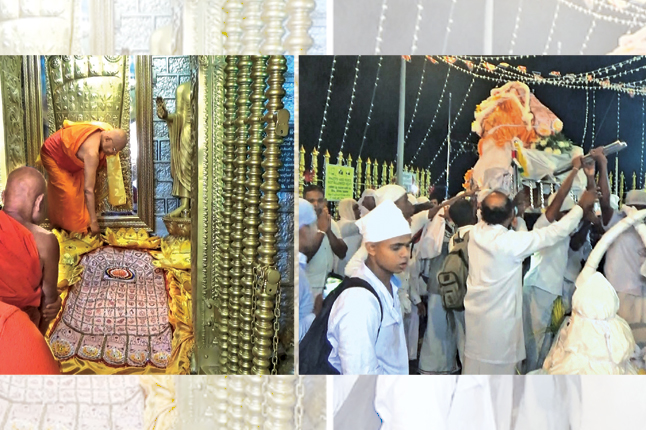
In response to a request by President Anura Kumara Dissanayake, it has been decided to hold a special exposition of the Sacred Tooth Relic for the public from April 18 to 27.

The exposition will be open to the public on April 18 from 3 p.m. to 5.30 p.m and thereafter, from April 19 to 27, daily from 12 p.m. to 5.30 p.m. A preliminary discussion on the event took place at the President’s House in Kandy under the patronage of President Anura Kumara Dissanayake yesterday (2).

President Dissanayake expressed his gratitude to the Mahanayake Theras for granting the Buddhist community of Sri Lanka the opportunity to partake in this sacred event after 16 years. He emphasized that the Buddhist people of Sri Lanka aspire to see the Sacred Tooth Relic revered and worshipped throughout their lifetime.

The President also expressed his belief that this occasion would help restore the declining civility in the country and serve as a catalyst for religious and cultural enlightenment.

Highlighting the significance of organizing such events for the promotion of Buddhist enlightenment, President Dissanayake conveyed his hope that this exposition, which coincides with the New Year celebrations, would help guide the country toward a new direction.

He anticipated the participation of hundreds of thousands of people, with large crowds expected to attend the exposition over the course of the ten-day event. The President stressed that it is the responsibility of all to ensure the public can worship the Sacred Tooth Relic without hindrance and assured that the government would provide full support to facilitate this opportunity for all.

During the discussion, it was decided to establish three separate lines for the public to venerate the Sacred Tooth Relic during the special exposition. President Dissanayake instructed officials to follow the guidance of the Mahanayake Theras regarding the safety of both the Sacred Tooth Relic and the public.

It was also proposed that schools in Kandy be closed during the period of the exposition, with alternative dates for student education to be scheduled. Considerable attention was given to ensuring adequate sanitary facilities for devotees and managing waste effectively. Plans were also made for a vehicle management system to handle the increased traffic during the event.

Additionally, extensive discussions were held regarding the provision of healthcare, drinking water, and other essential services for the public. There was also a proposal to allow people who wish to provide food for devotees to register for the Dansal.

Further discussions focused on the importance of decorating the event in a manner that promotes Buddhist enlightenment and raises awareness about the exposition of the Sacred Tooth Relic.

The meeting was attended by Maha Sangha led by the Malwathu and Asgiri Anunayake Theras, Buddhist Affairs, Religious and Cultural Affairs Minister Dr.Hiniduma Sunil Senavi, Agriculture, Livestock, Land, and Irrigation Minister K. D. Lal Kantha, Central Province Governor Sarath Abayakoon, Secretary to the President Dr.Nandika Sanath Kumanayake, Diyawadana Nilame Pradeep Nilanga Dela, District Secretary, Divisional Secretaries, heads of line institutions, and senior officials from the Tri-Forces and police.

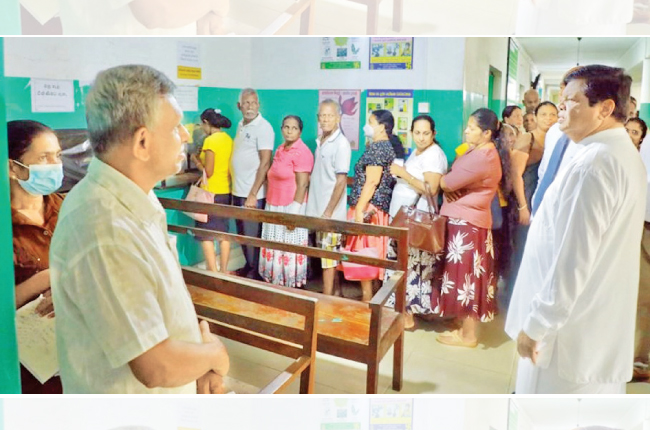
Health and Media Minister Dr. Nalinda Jayatissa pointed out that the Government is spending more than 40 times the annual budget allocated to the indigenous Ayurvedic medical sector on treating diseases caused by unhealthy dietary habits.

The minister made this revelation during a recent visit to the ‘Research and Propagation Service Herbal Garden’ in Janasavigama, Pallekele, Kandy, which has been established under the National Medicinal Plant Cultivation Project and the Herbal Collection Programme of the Ayurveda Department.

Minister Jayatissa also emphasised that diseases resulting from poor dietary habits have become an unbearable burden on the country. He highlighted that while significant funds are spent on medical treatments, the government is compelled to spend an amount exceeding 40 times the Ayurveda budget annually to treat such illnesses.

He also noted that Ayurveda is not solely about treatments but also prioritises diet as a crucial aspect of health. He stressed that merely spending money on medicine and treatment without preventive measures is ineffective. Considering these issues, he proposed launching a three-year national nutrition programme in collaboration with all relevant sectors.

Under the guidance of the Health Minister, a National Medicinal Plant Cultivation Project and a Herbal Collection Programme have already been initiated to strengthen the production network of Ayurvedic medicines. These initiatives are planned for implementation over the next five years, with the first phase already underway.

The Ayurveda Department manages seven research herbal gardens, located in Giradurukotte, Pallekele, Haldummulla, Pinnaduwa, Pattipola, Kanneliya and Navinna. Additionally, under the Sri Lanka Ayurvedic Drug Corporation, herbal gardens have been established in Nikaweratiya, Medawachchiya, Dangolla, and Ambanpola.

Minister Jayatissa also stated that the Government is working to enhance the network of local herbal gardens and increase domestic production of Ayurvedic medicines. He pointed out that Sri Lanka imports over 130 varieties of medicinal raw materials annually, requiring substantial financial expenditure. However, a large proportion of these medicinal plants can be cultivated locally, he added.

He also emphasised the potential of the national medicinal plant cultivation project to produce surplus medicinal raw materials for export, thereby earning foreign exchange. Additionally, boosting local Ayurvedic medicine production can strengthen the rural economy.

During the visit, the ministers inspected the herbal plants in the garden and participated in a symbolic tree-planting ceremony.

Health and Media Deputy Minister Dr. Hansaka Wijemuni, Central Province Governor S.B.S. Abeykoon, Central Province Ayurvedic Commissioner W.D.C. Wickramathilaka, Ayurvedic Commissioner Dr. Dhammika Abeygunawardena, Central Province Chief Secretary Ajith Premasinghe, Central Province Health Secretary Jagath Adhikari, Research and Outreach Herbal Garden Supervisory Medical Officer R.R.M.R.V.W.K. Medagama and Ayurvedic hospital doctors and staff attended the observation tour.

Page 14 of 119

Latest News

Cabinet Decisions

Dec 12, 2025
Transfer of Constructions and Land reserved for Kinniya University to the Ministry of…

World Bank to provide $30 million for sustainable energy project - target is to generate 70% of the country's electricity from renewable sources by 2030

Dec 11, 2025
The World Bank has agreed to provide Rs. 9,000 million (US$30 million) in assistance to…

President Thanks Donald Trump for Assistance to Sri Lanka

Dec 11, 2025
Sri Lankan President Anura Kumara Dissanayake has expressed his gratitude to the United…

UK High Commissioner to Sri Lanka held a meeting with deputy minister of Mass Media

Dec 08, 2025
UK High Commission delegation led by High Commissioner H E Andrew Patrick visited the…

Accurate data is vital when making economic decisions - President

Dec 07, 2025
President Anura Kumara Dissanayake emphasised that accurate data is crucial when making…

FULL SPEECH: President's Address To The Nation

Dec 01, 2025
COLOMBO (News 1st); Sri Lankan President Anura Kumara Dissanayake on Sunday (30)…

Disaster relief: President meets NGOs

Nov 30, 2025
President Anura Kumara Dissanayake emphasised that maintaining proper coordination among…

Police release 47 emergency hotlines for reporting disaster situations

Nov 30, 2025
Due to the ongoing adverse weather conditions across the island, the Sri Lanka Police has…

Police introduce emergency number for life-saving rescue assistance

Nov 30, 2025
Sri Lanka Police has launched a special emergency contact for life-saving rescue…

Disaster? Dial 117

Nov 27, 2025
Public Advised to Call 117 in the Event of a Disaster